Edition of 100
64 pages, 115 X 165 mm
120 g Olin Cloud with 240 g Olin Cloud cover stock
Self-end-papered
I Am Born is a follow-up to Autobiography, Lexier’s 2022 contribution to the Tonini Editore series. Both books share a size, a page count and a sensibility. Whereas Autobiography was empty, I Am Born is full. Whereas Autobiography’s subject was the book itself, I Am Born’s subject is the maker of the book. Each book takes a single element -- in the case of Autobiography, the colophon; in the case of I Am Born, the artist’s birth year -- and makes that its subject.
Starting with number 1 at the top left of the front cover and ending with number 11,520 at the bottom right of the back cover, I Am Born is printed grey, except for the number 1960, the artist’s birth year, which is printed black. It is the only thing in the book treated differently.
I Am Born is an homage to several previous artists’ publications that utilized grids of numbers, specifically Stanly Brouwn’s 1 step-100000 steps from 1972, but also to many non-art sources, including the RAND Corporation’s 1955 publication A Million Random Digits with 100,000 Normal Deviates.
Edition of 100
64 pages, 115 X 165 mm
120 g Olin Cloud with 240 g Olin Cloud cover stock
Self-end-papered
I Am Born is a follow-up to Autobiography, Lexier’s 2022 contribution to the Tonini Editore series. Both books share a size, a page count and a sensibility. Whereas Autobiography was empty, I Am Born is full. Whereas Autobiography’s subject was the book itself, I Am Born’s subject is the maker of the book. Each book takes a single element -- in the case of Autobiography, the colophon; in the case of I Am Born, the artist’s birth year -- and makes that its subject.
Starting with number 1 at the top left of the front cover and ending with number 11,520 at the bottom right of the back cover, I Am Born is printed grey, except for the number 1960, the artist’s birth year, which is printed black. It is the only thing in the book treated differently.
I Am Born is an homage to several previous artists’ publications that utilized grids of numbers, specifically Stanly Brouwn’s 1 step-100000 steps from 1972, but also to many non-art sources, including the RAND Corporation’s 1955 publication A Million Random Digits with 100,000 Normal Deviates.


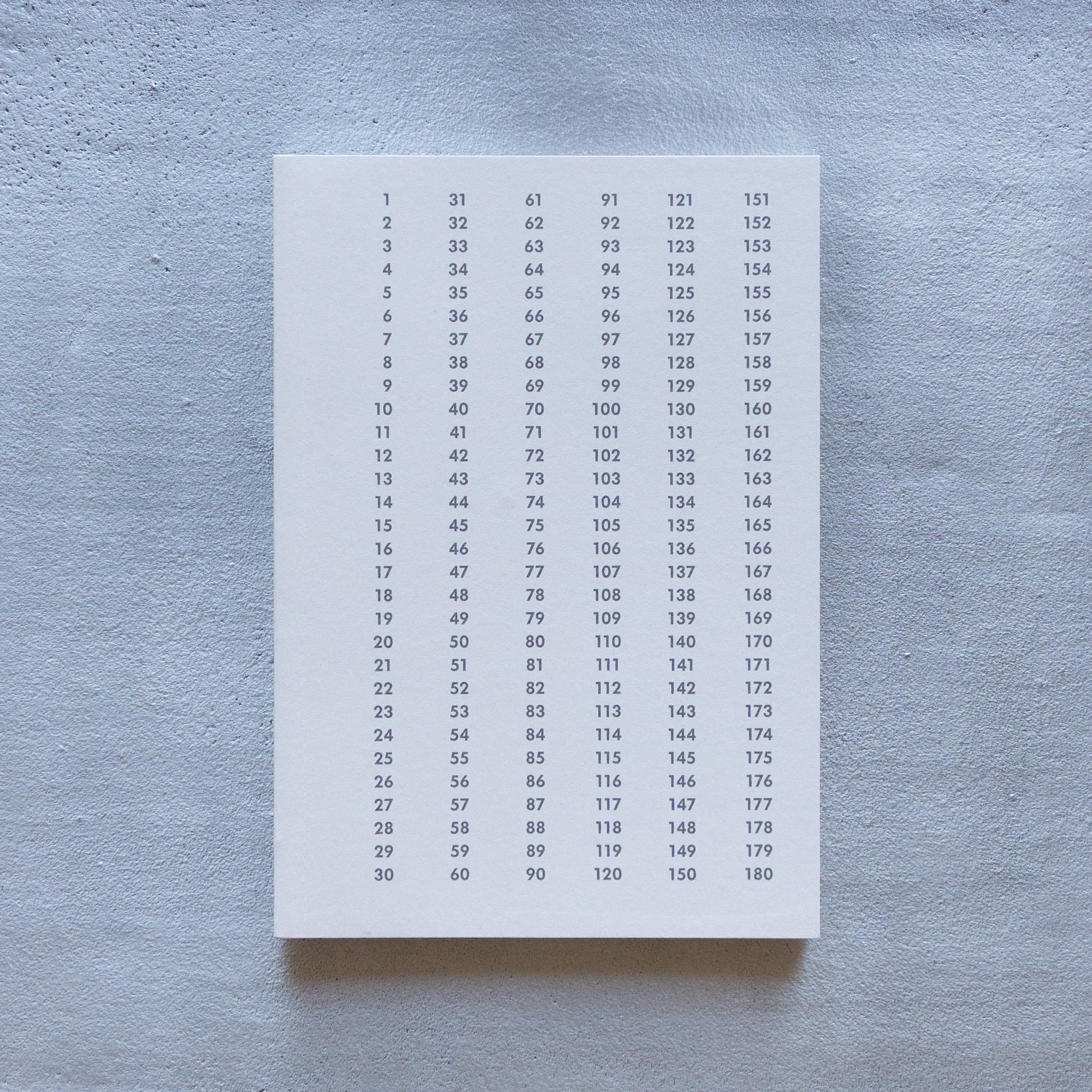 Image 1 of 10
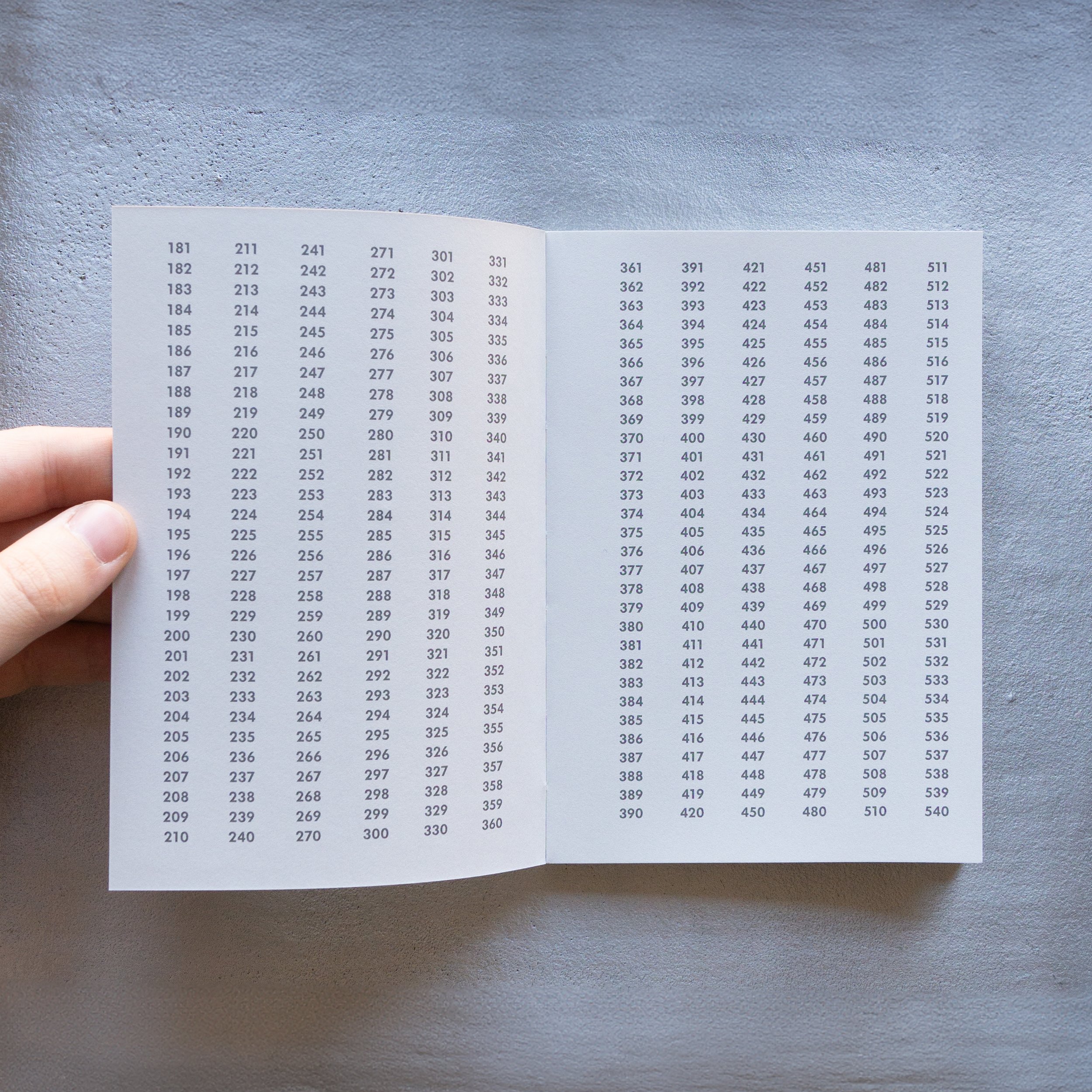 Image 2 of 10
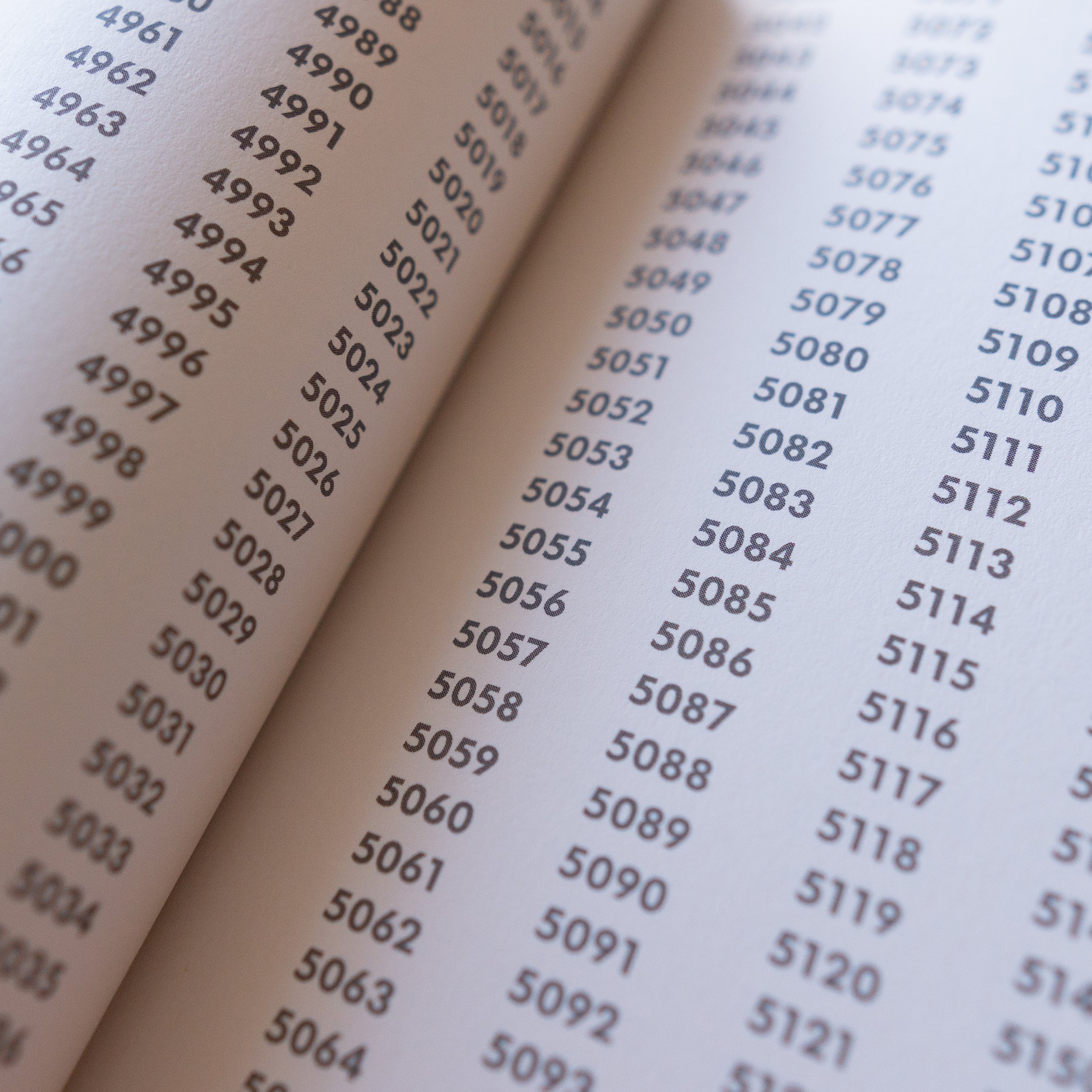 Image 3 of 10
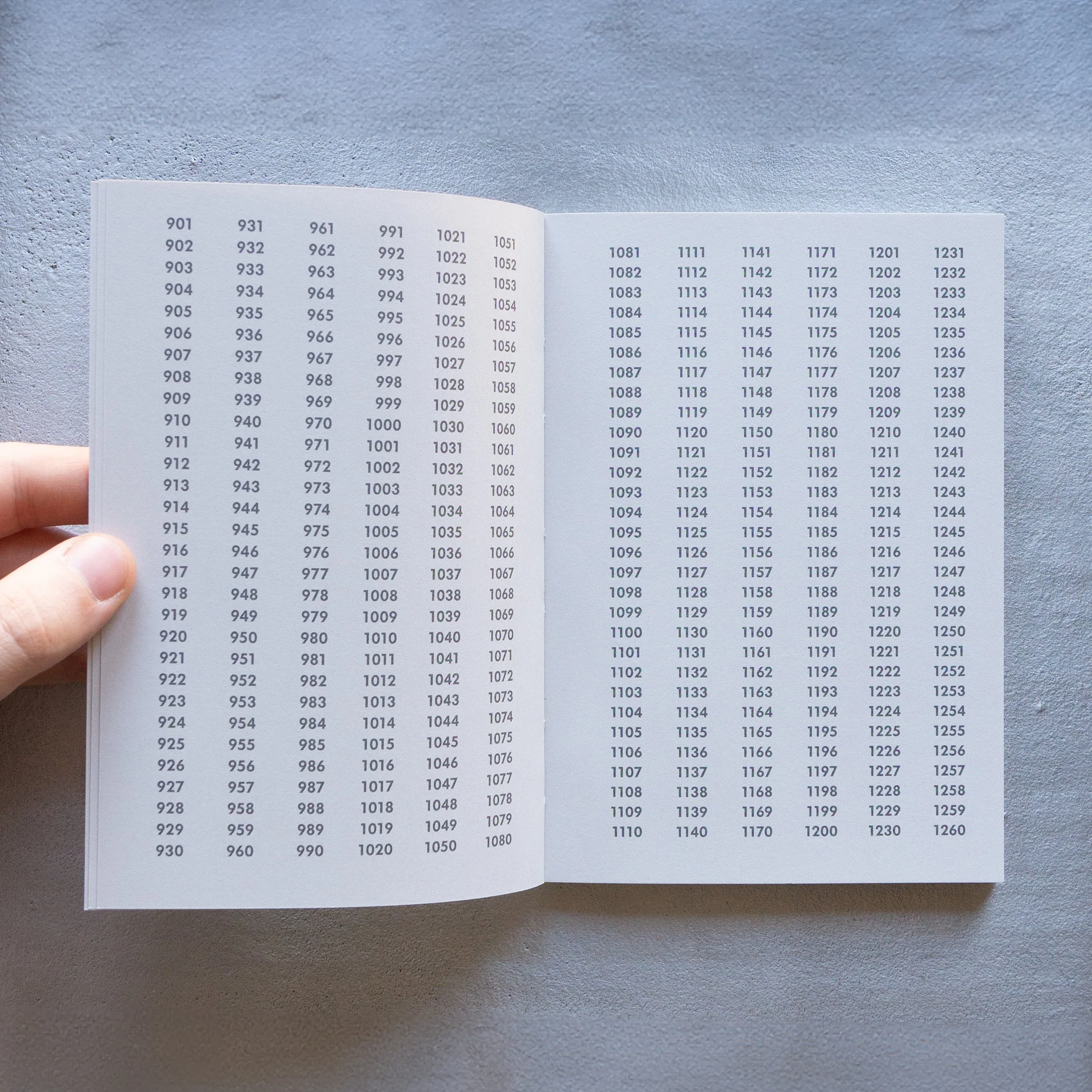 Image 4 of 10
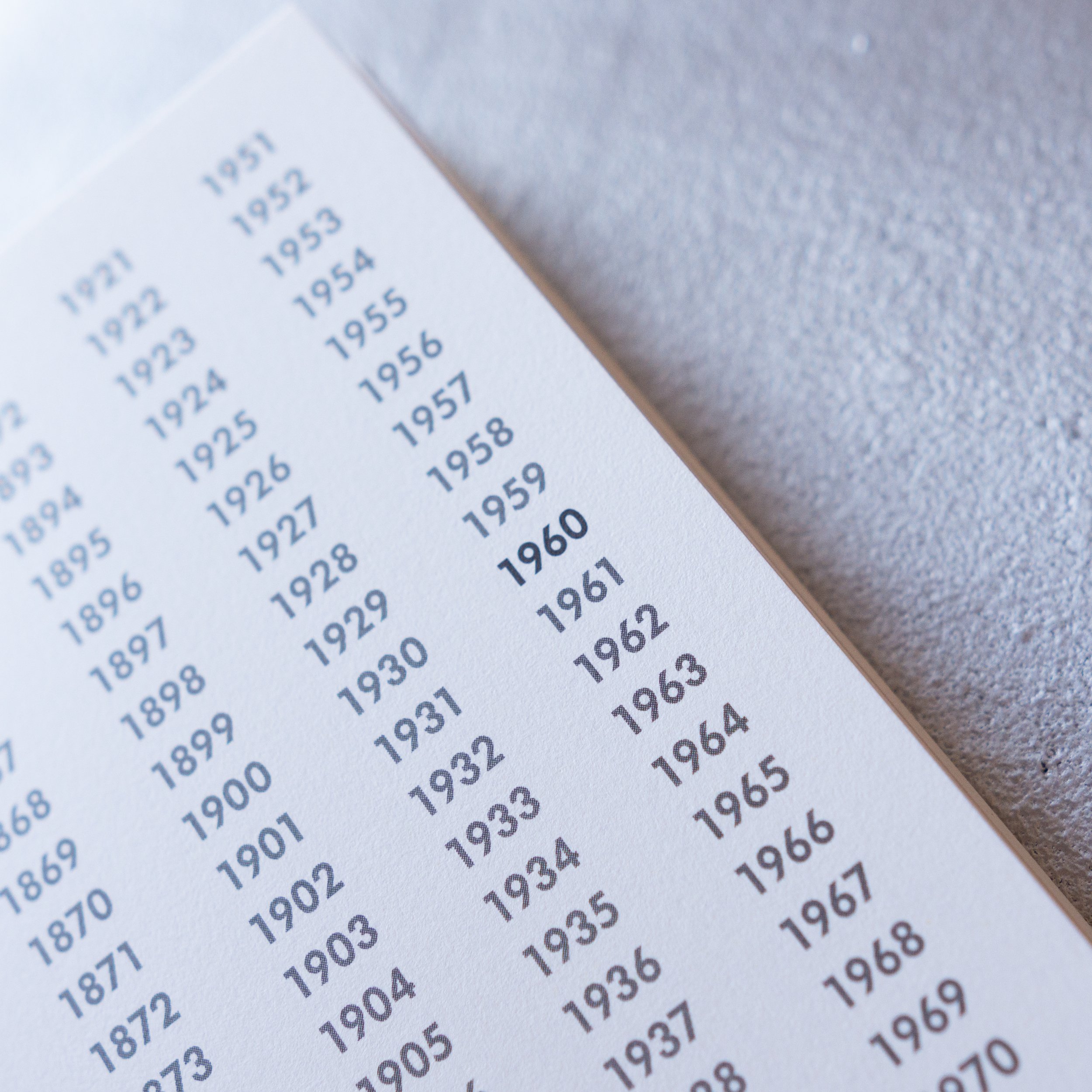 Image 5 of 10
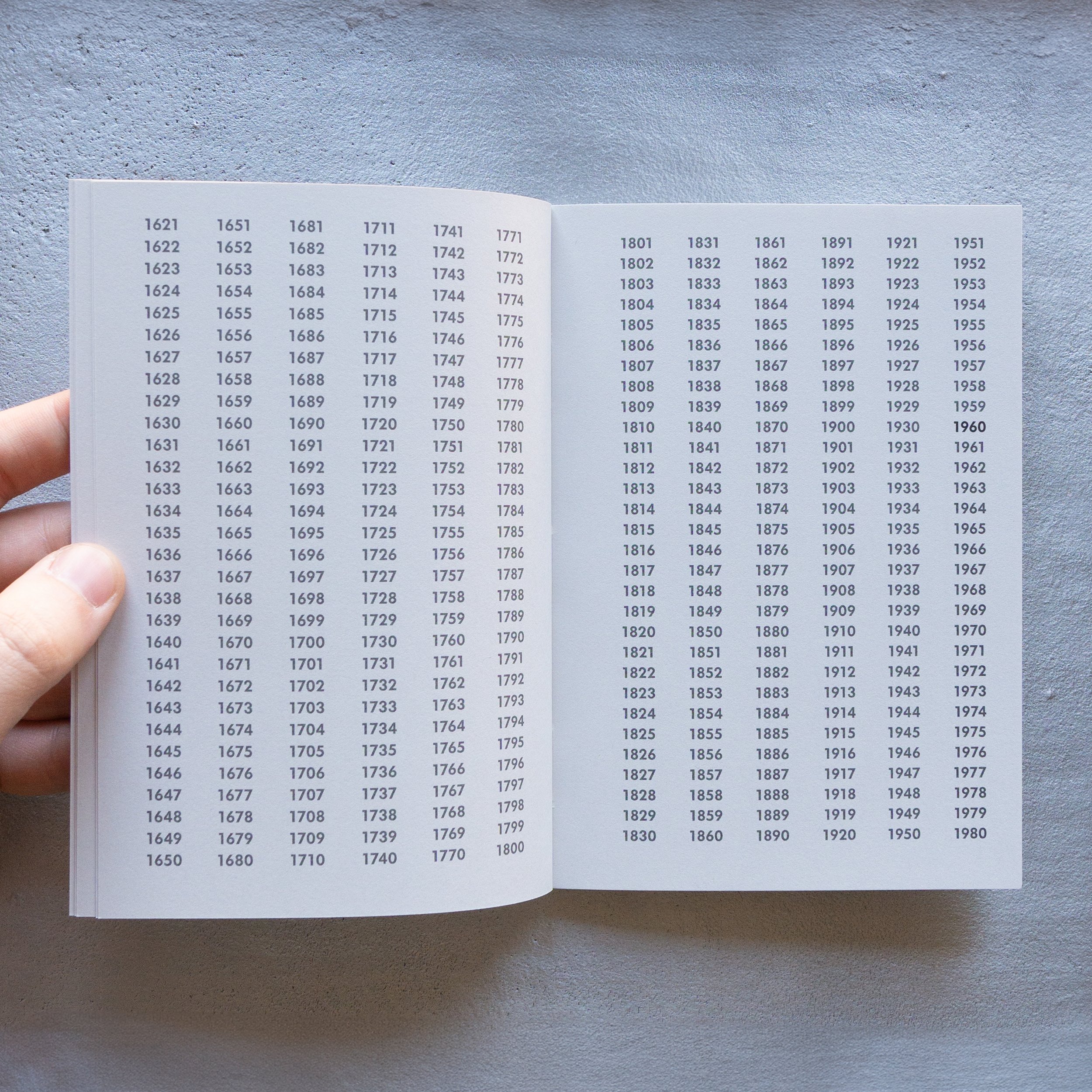 Image 6 of 10
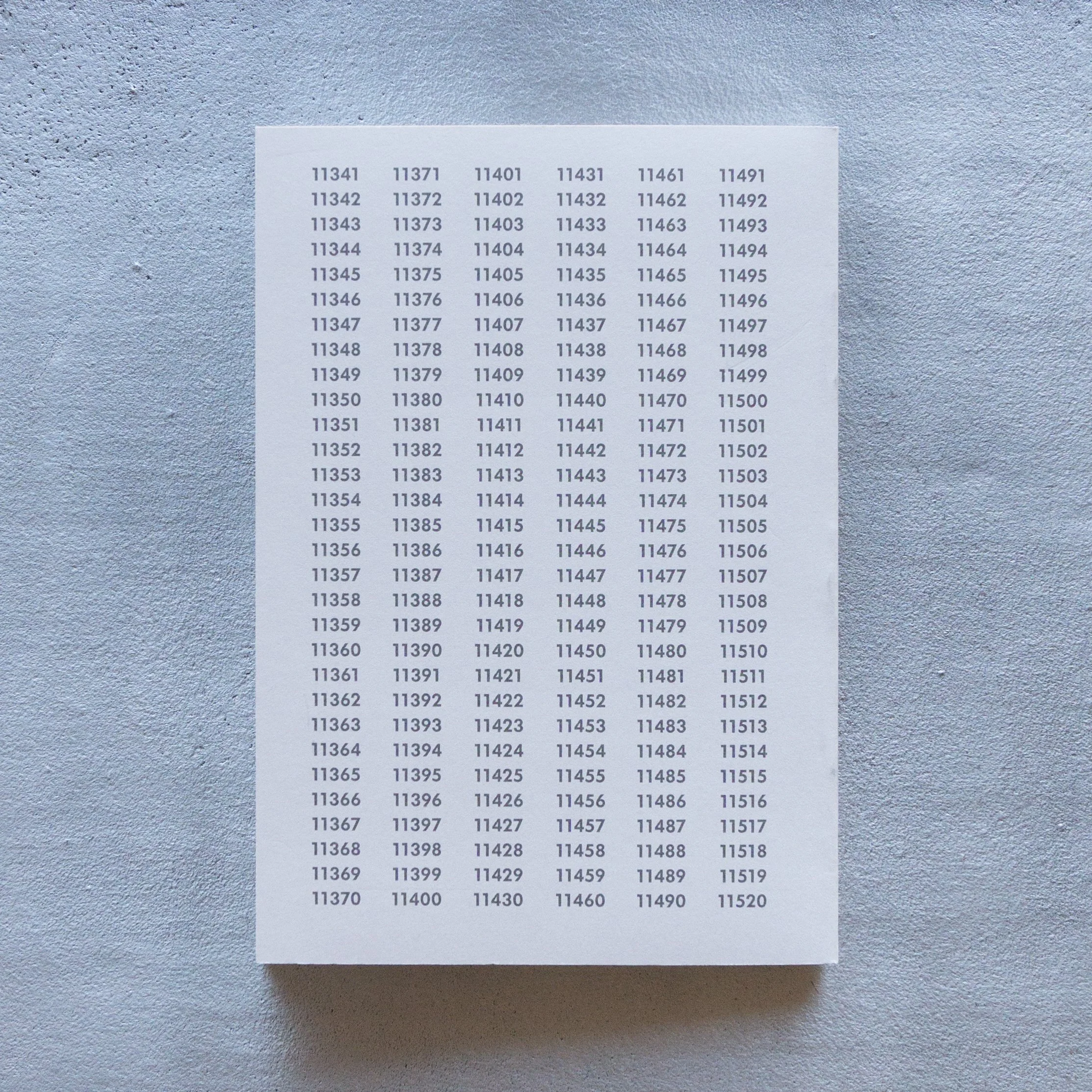 Image 7 of 10
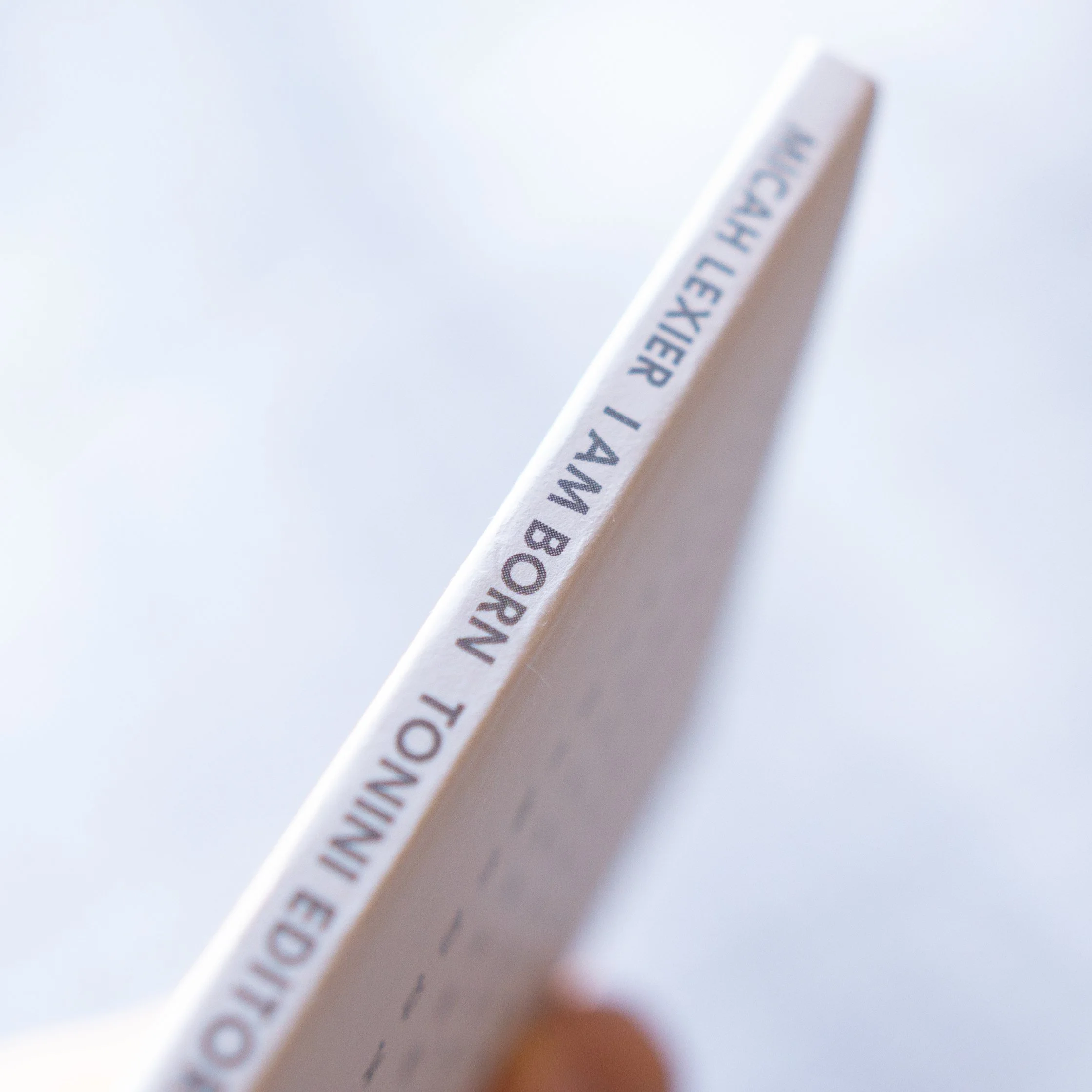 Image 8 of 10
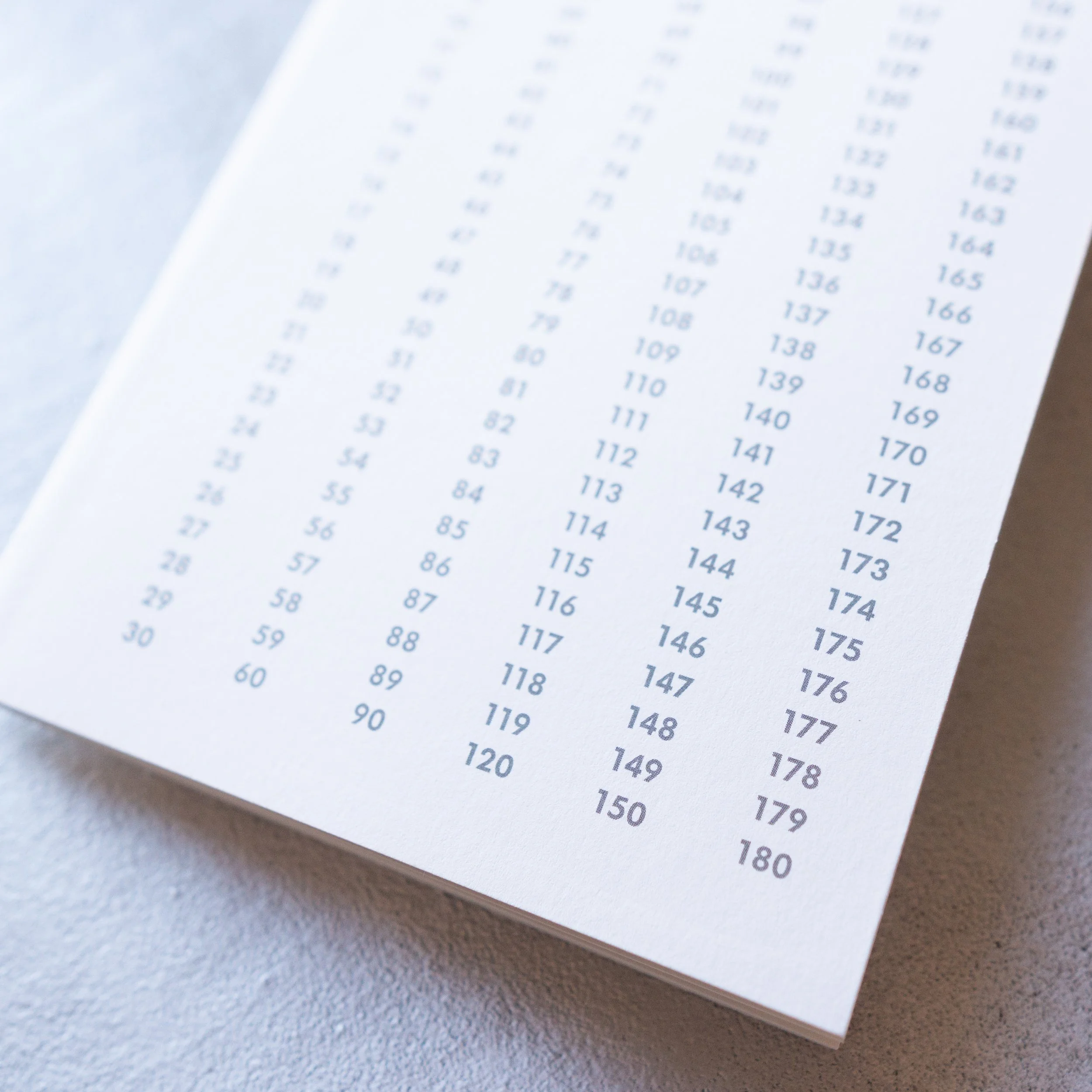 Image 9 of 10
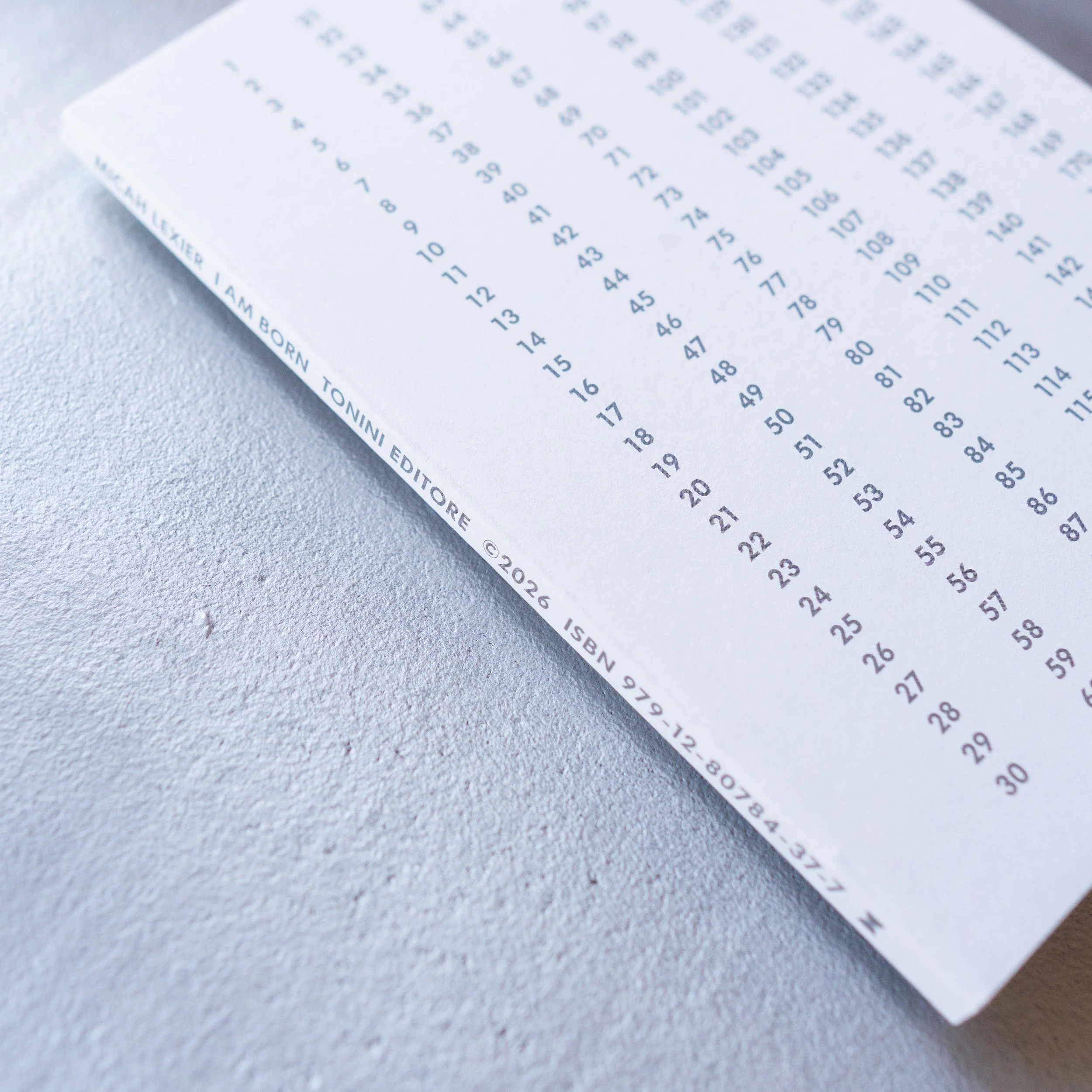 Image 10 of 10