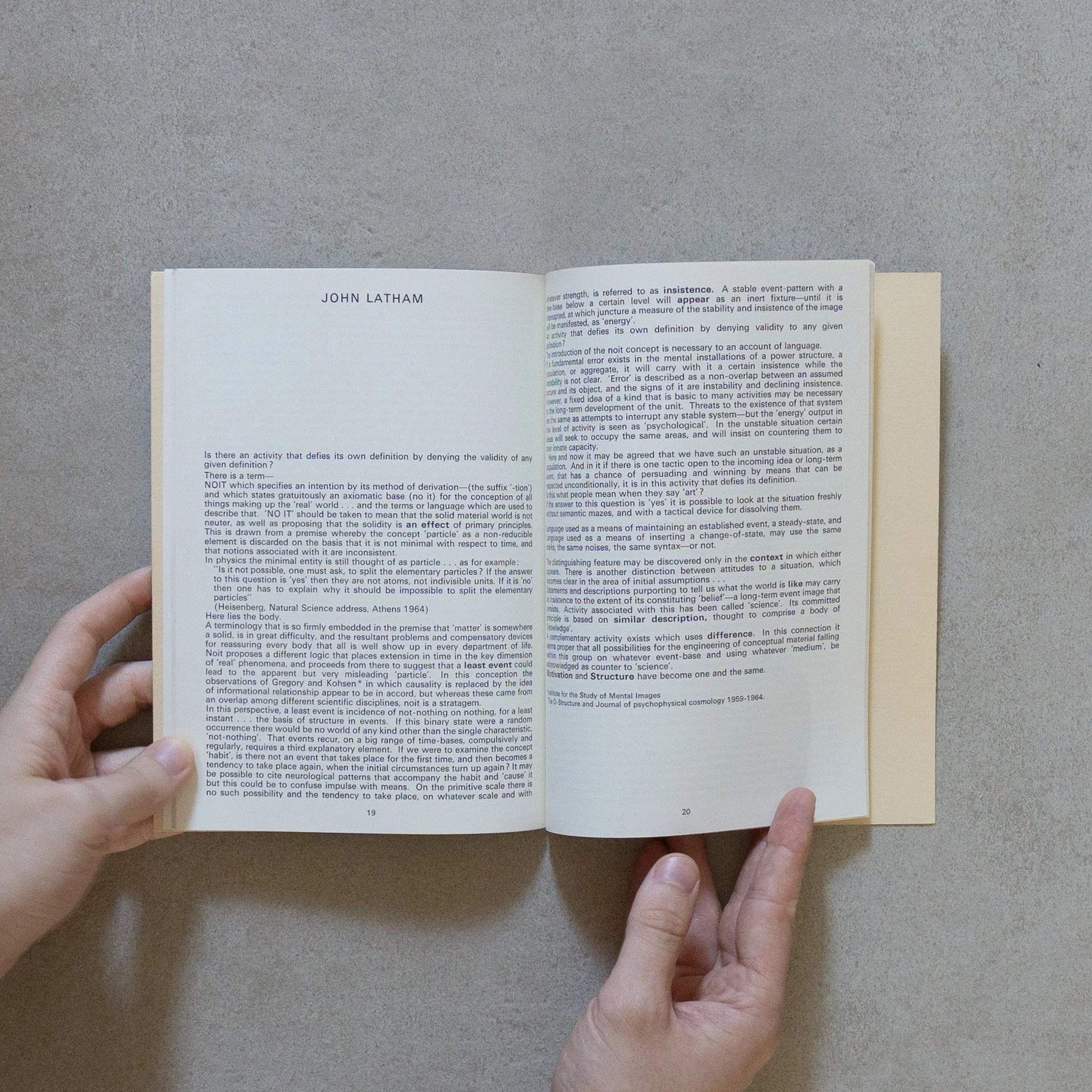
Donald Burgy / Art Ideas for the years 4000

€150.00

BURGY Donald (U.S.A. 1937)

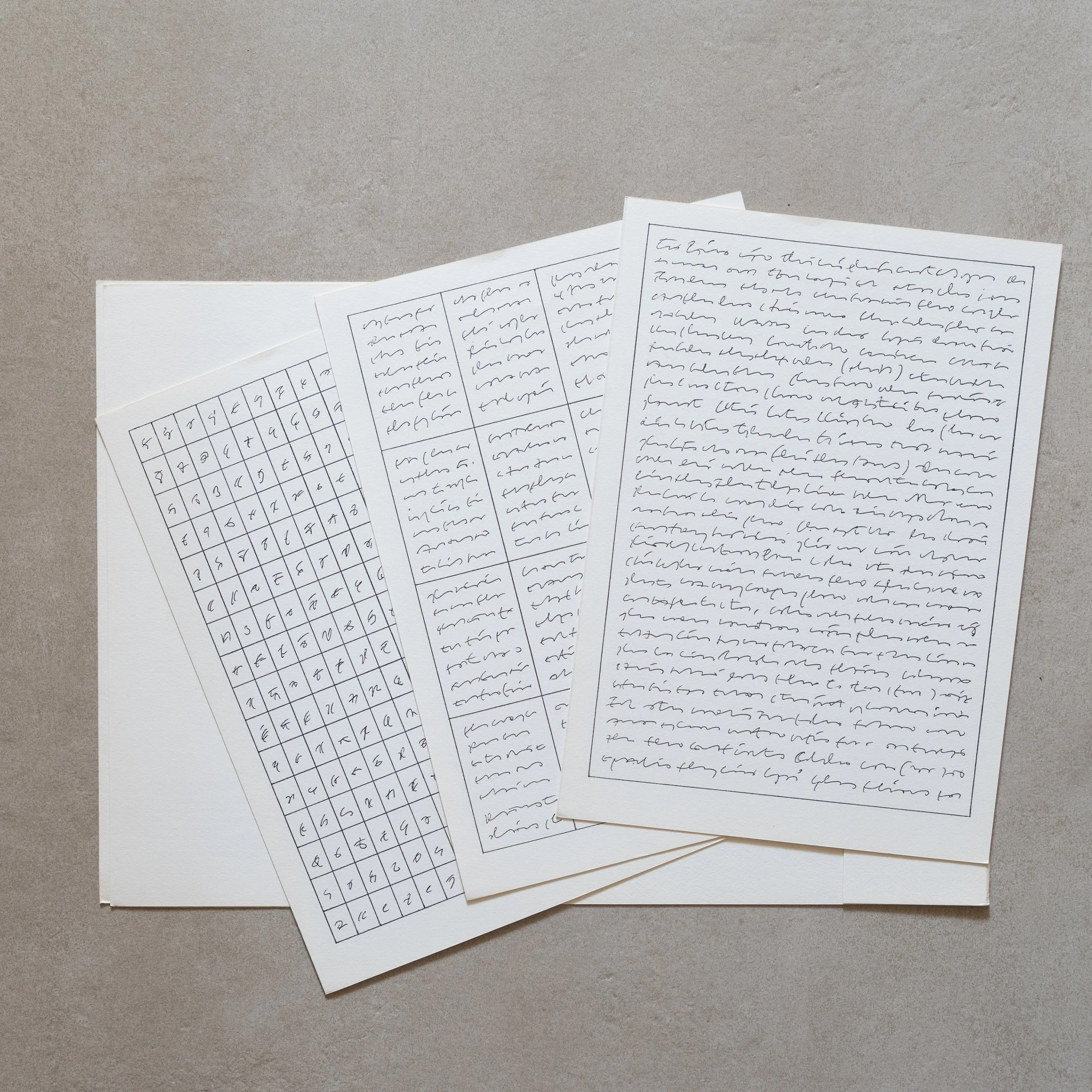
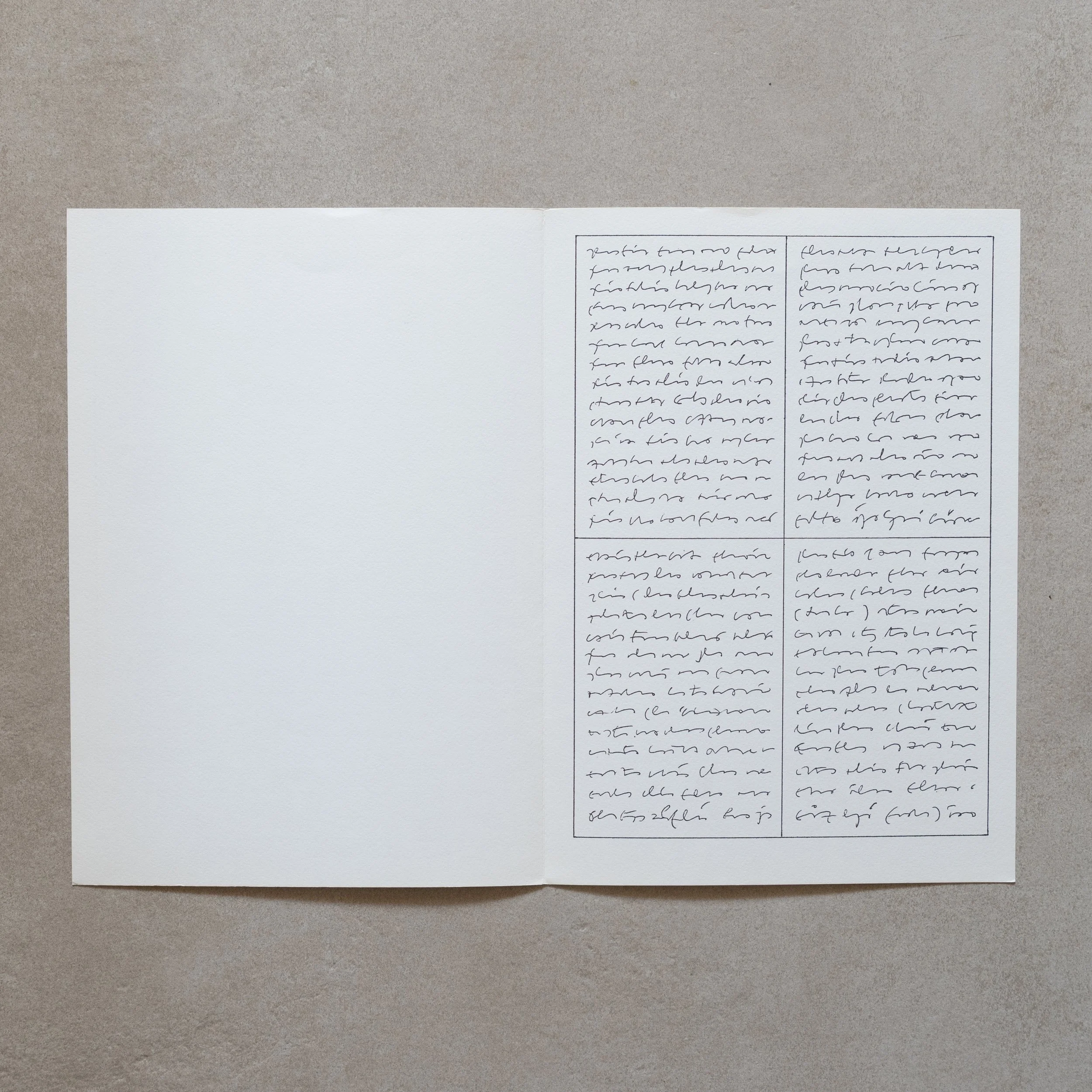
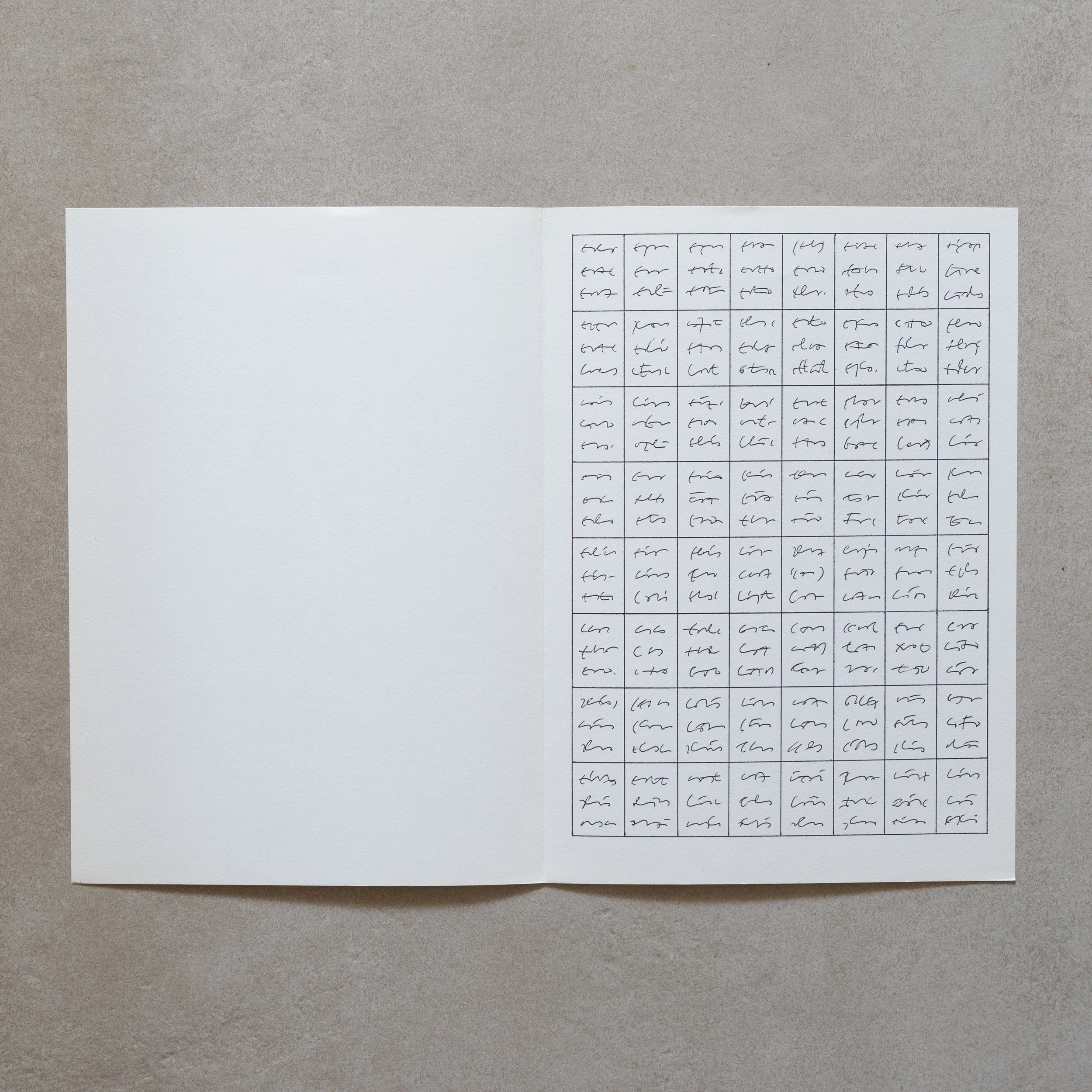
Andover, Addison Gallery, 1970, 22,8 × 21,5 cm, paperback, pp. [36], artist's book with texts and definitions by Donald Burgy accompanied by some illustrative drawings. Introduction by Jack Burnham. First edition.

[Bibliography: Mantura 1974: p. 417.].

“Burgy presents us with a series of mental exercises based on the most general analytical technique currently in use: systems theory. Here, the world and the universe are conceived as a series of interconnected systems: animate and inanimate, mechanical and biological, entropic and anti-entropic. As humans, we find ourselves relegated to some of the middle levels of the systems hierarchy. As artists, we rarely go beyond manipulating a few observable elements at any given time. In the natural ordering of the universe’s spheres, any system within a hierarchy interacts only with the spheres directly above or below it, one or two steps at a time. This also applies to human nature. Yet, by moving towards more complex and distant levels of organisation, Burgy defines consciousness itself: the extraction of order from chaos, of information from noise. All possibilities become tangential.” (Excerpt from the introductory essay by Jack Burnham)
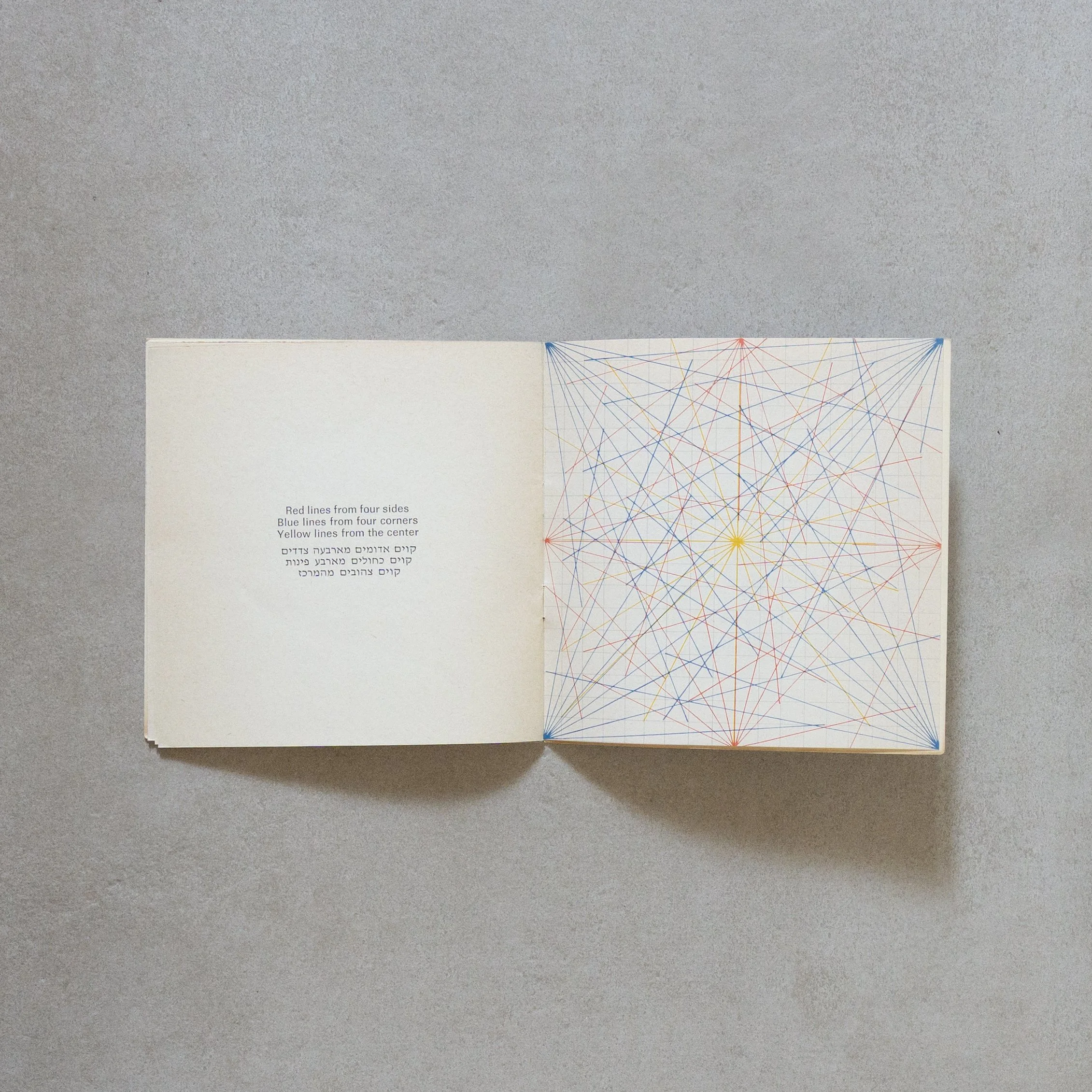
BURGY Donald (U.S.A. 1937)

Andover, Addison Gallery, 1970, 22,8 × 21,5 cm, paperback, pp. [36], artist's book with texts and definitions by Donald Burgy accompanied by some illustrative drawings. Introduction by Jack Burnham. First edition.

[Bibliography: Mantura 1974: p. 417.].

“Burgy presents us with a series of mental exercises based on the most general analytical technique currently in use: systems theory. Here, the world and the universe are conceived as a series of interconnected systems: animate and inanimate, mechanical and biological, entropic and anti-entropic. As humans, we find ourselves relegated to some of the middle levels of the systems hierarchy. As artists, we rarely go beyond manipulating a few observable elements at any given time. In the natural ordering of the universe’s spheres, any system within a hierarchy interacts only with the spheres directly above or below it, one or two steps at a time. This also applies to human nature. Yet, by moving towards more complex and distant levels of organisation, Burgy defines consciousness itself: the extraction of order from chaos, of information from noise. All possibilities become tangential.” (Excerpt from the introductory essay by Jack Burnham)
"Burgy ci presenta una serie di esercizi mentali basati sulla tecnica analitica più generale attualmente in uso, la teoria dei sistemi. Qui il mondo e l'universo sono concepiti come una serie di sistemi interconnessi, animati e inanimati, meccanici e biologici, entropici e anti-entropici. Come umani, ci vediamo accantonati in alcuni dei gradi centrali della gerarchia dei sistemi. Come artisti raramente andiamo oltre la gamma di manipolare alcuni osservabili in qualsiasi momento. Nell'ordine naturale delle sfere dell'Universo in qualsiasi gerarchia di sistemi si tratta solo, uno o due passi alla volta, con le sfere direttamente sopra o sotto di essa. Ciò vale anche per la natura umana. Ma evolvendosi verso piani di organizzazione più complessi e distanti, Burgy definisce la coscienza stessa: l'estrazione dell'ordine dal caos, l'informazione dal rumore. Tutte le possibilità diventano tangenziali." (Estratto dal saggio introduttivo scritto da Jack Burnham)