 Image 1 of 5
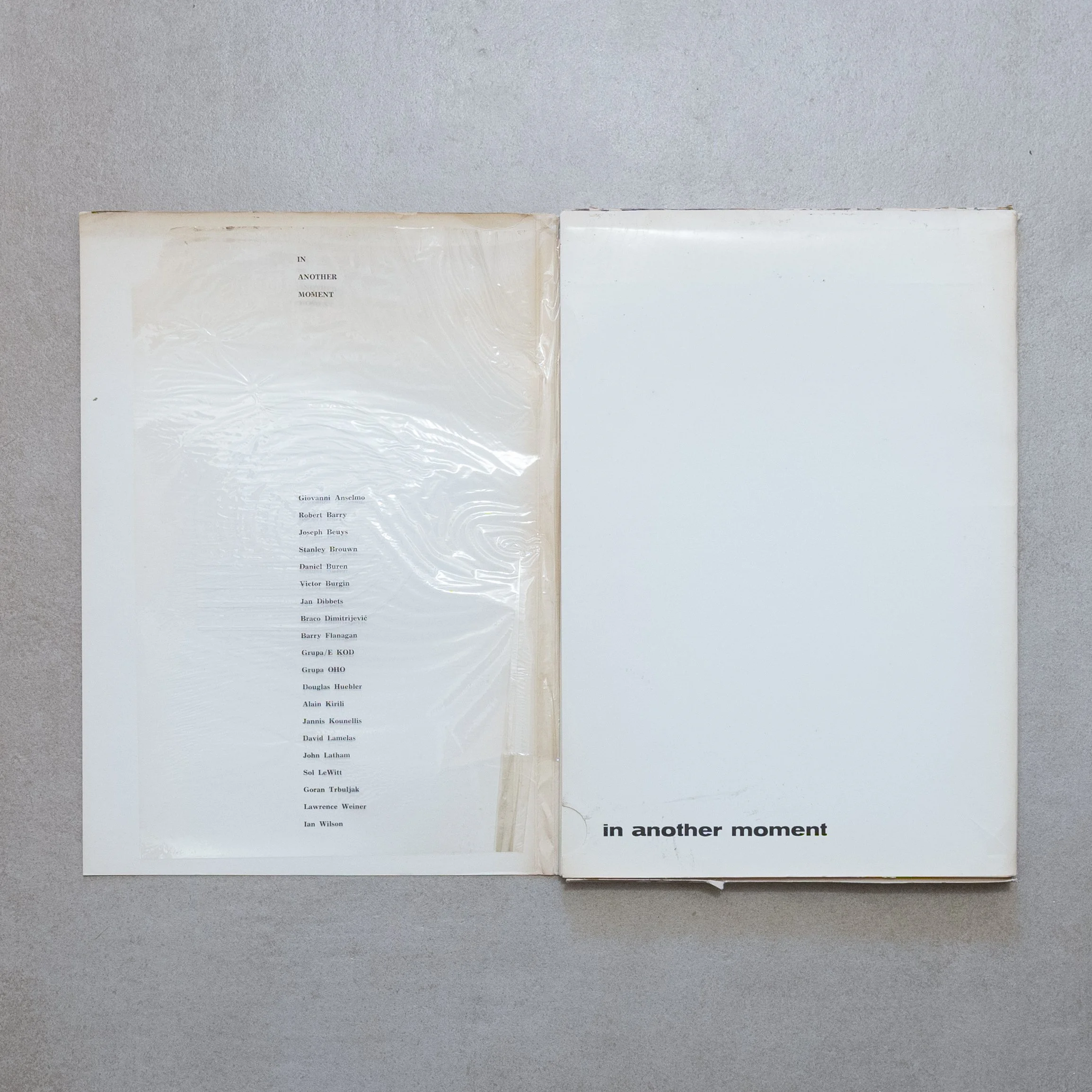 Image 2 of 5
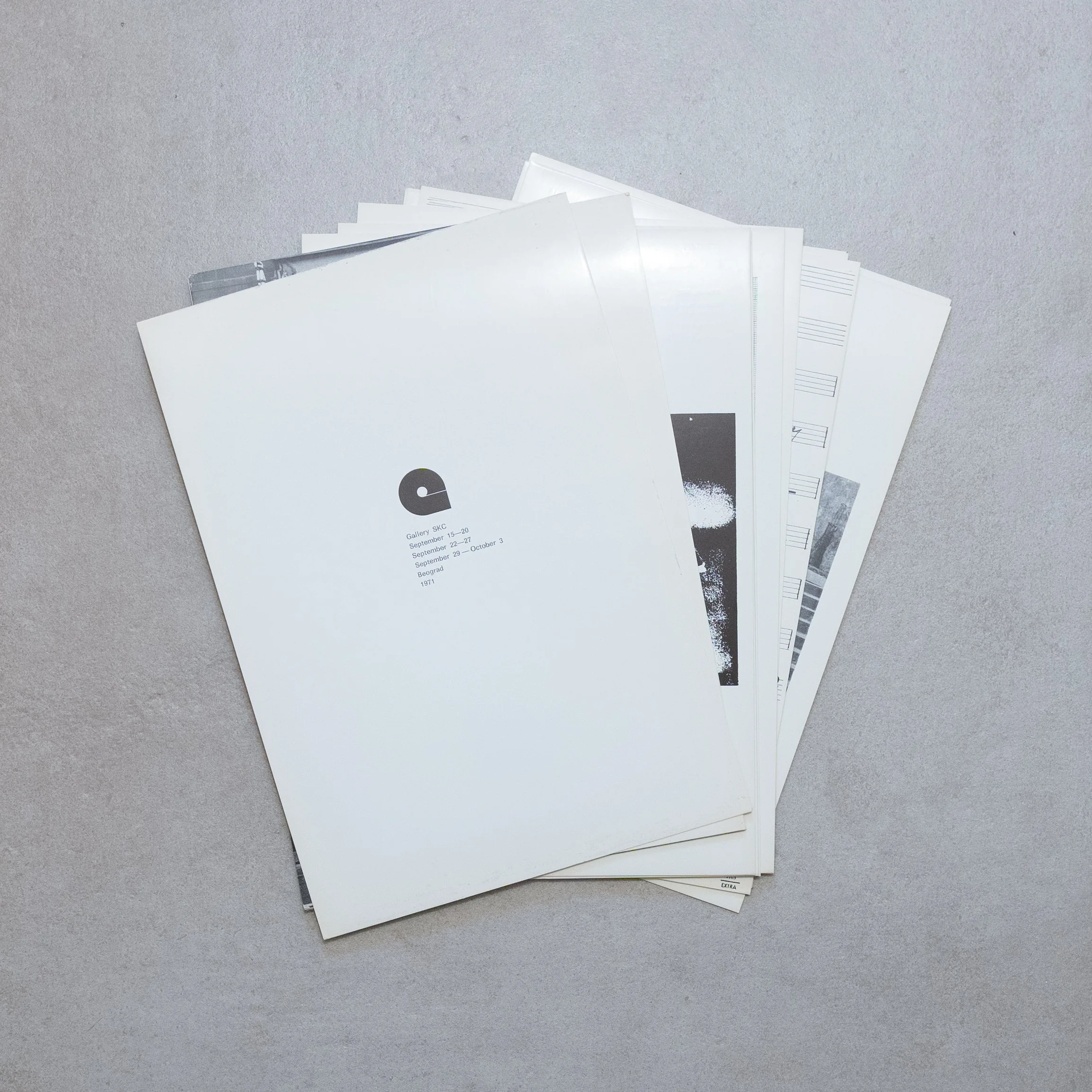 Image 3 of 5
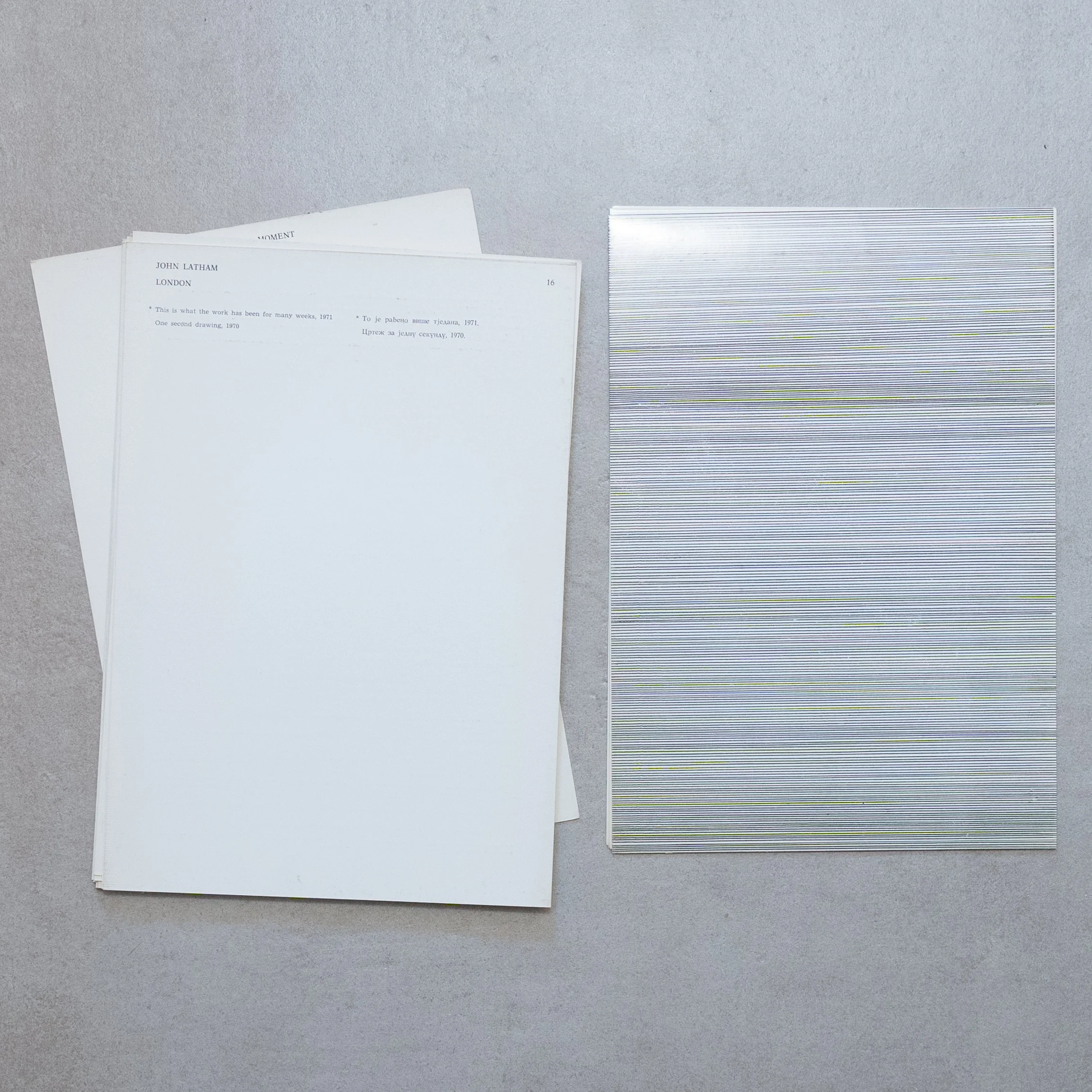 Image 4 of 5
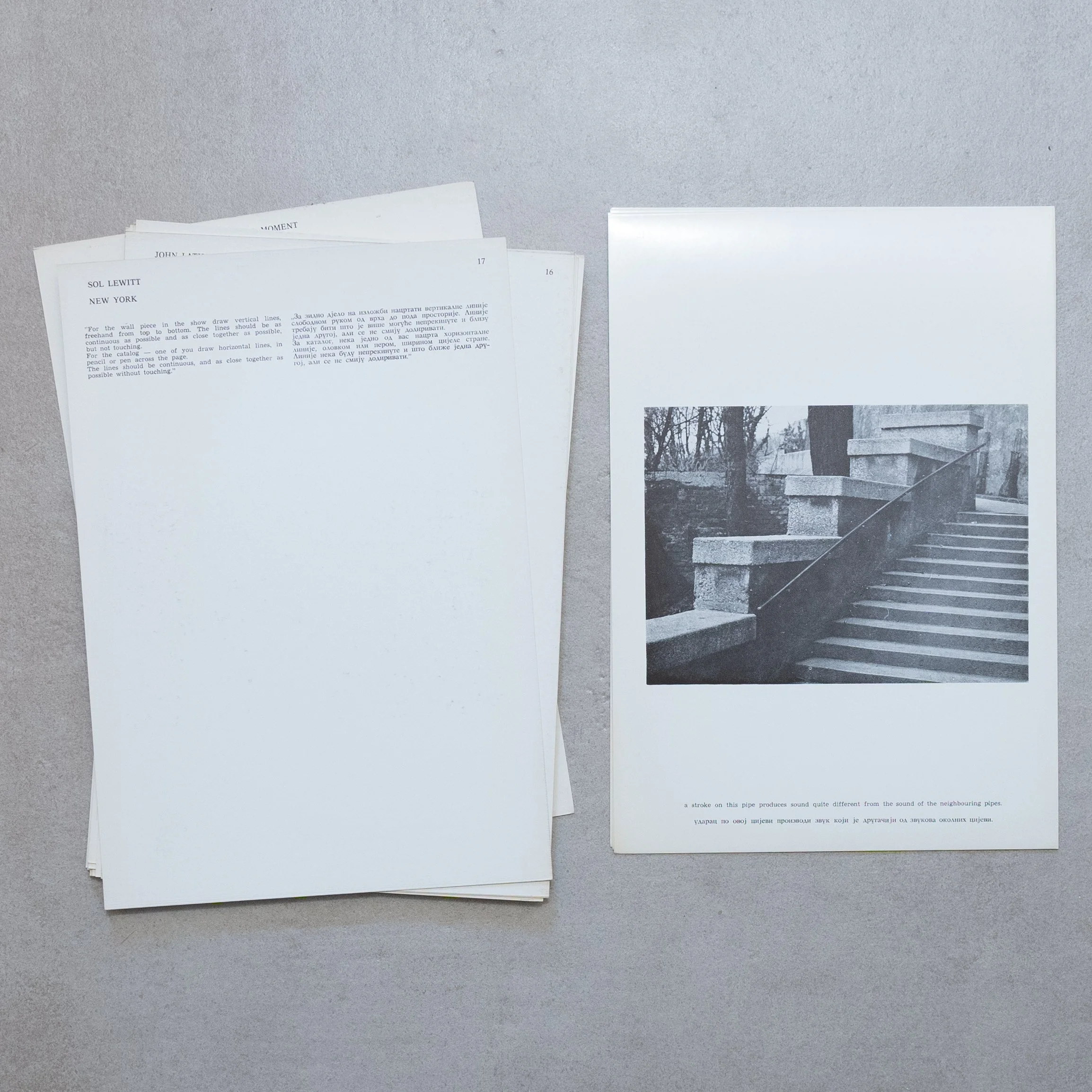 Image 5 of 5
In April 1971, the exhibition At the Moment opened in Zagreb and was subsequently presented in Belgrade under the title In Another Moment. In Zagreb, the exhibition - bringing together works by 16 international artists and 3 artist groups - did not take place in a museum or in an institutional exhibition space, let alone a white cube, but in the entrance hall of an ordinary residential building facing a busy street in the historic city center. The catalogue documents this simple, anonymous location through three photographs showing it on the “day before the exhibition,”the “day of the exhibition” and the “day after the exhibition.” Placed prominently at the beginning of the catalogue, these images make clear that the choice of venue was itself a conceptual gesture, grounded in randomness and simplicity. Beyond this seemingly incidental entranceway, the images depict nothing more than passers-by and, on the opening day, a slightly larger number of visitors, as well as a Volkswagen Beetle driving past. It is no coincidence that Nena Dimitrijević’s preface opens with the sentence: “An international exhibition organized in the doorway of an ordinary residential building (…)” Ultimately, the intention was to desacralize art: the works were to be literally removed from their pedestals, taken out of the temple of art, and brought into the space of the street.
As stated in the introduction, “the concept was the negation of the gallery as a constant and ‘consecrated’ exhibition space.” The duration of the exhibition also departed from convention: the works were on view for only three hours. Although the Belgrade presentation took place in a gallery, a disruption of established norms was again integral to the project: the exhibition was interrupted twice to allow for new configurations. The decisive element, however, was that these rearrangements were entrusted neither to the curators nor to the artists, but each time to a member of the technical staff. In this way, Nena and Braco Dimitrijević pursued a key operational principle of conceptual art, delegating as many stages as possible in order to interrupt the fetishization of the artwork and the continuity of its association with the author. Chance was thus introduced as an active element in the exhibition process. The catalogue itself is fully consistent with this approach. Instead of a traditional bound format, it consists of loose plates gathered in a folder, freely rearrangeable. Although numbered on the reverse, the plates do not follow a thematic order but are organized solely according to the alphabetical order of the artists’ and groups’ names. This allows for ever-changing relationships among the individual elements. Thanks to the high quality of printing, each plate is not merely a reproduction but takes on the character of an autonomous work. The folder thus becomes a portable exhibition, reconfigurable by anyone—the greatest possible flexibility being the stated aim of the two exhibition organizers. (Cf. Seraina Renz, Kunst als Entscheidung: Performance- und Konzeptkunst der 1970er Jahre am Studentischen Kulturzentrum Belgrad, München 2018, pp. 123-132).
![Daniel Buren / Daniel Buren. Position – Proposition [Eine Manifestation]](https://images.squarespace-cdn.com/content/v1/60e820d70025154c9413112f/eaf56a93-039e-4c47-a422-10b4c54ff1e7/_DSC1081.jpg)